
AI Leaders We Cannot Wait to Hear at Ai4 2026
AI agents move faster than the enterprise controls around them. Every prompt, tool invocation, data retrieval, and response now sits inside a new authorization surface that identity, security, and IAM teams need to govern. Ai4 2026 (August 4 to 6 at The Venetian in Las Vegas) brings together the enterprise leaders actually building AI in production. PlainID will be on-site all three days, and the speakers below are the ones we cannot wait to hear.
Runtime authorization sits at the center of the enterprise AI conversation, whether the conversation admits it or not.
Every agent that reasons over enterprise data crosses four access points: a prompt input, tool invocations, data retrievals, and response generation. Each of those points can leak, over-return, or bypass the controls a compliance team spent years building.
That’s why PlainID is attending Ai4 2026. The conference gathers the enterprise AI leaders actually shipping models, agents, and RAG pipelines into production. Their sessions surface the exact governance questions the PlainID team works on every day.
Some talks name AI security and trust directly in the title, while others come at it through cost, scale, or business-value framing. All of them create authorization work downstream.
Below, all Ai4 2026 speakers we cannot wait to hear, with each session and the identity angle behind it.
The Ai4 2026 Speakers We Cannot Wait to Hear
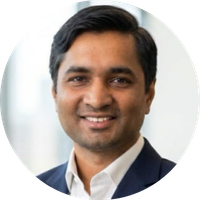
Speaker: Raghavendra Bagalkoti Vice President, Capital Markets Data Platform at Barclays
Session: AI Cloud Economics: Controlling Infrastructure Costs and Maximizing ROI
Cost conversations about enterprise AI usually skip the authorization angle, and PlainID has watched customers cut cloud spend by tightening agent permissions alone. Our question for Raghu is whether authorization shows up in the FinOps conversation at Barclays or stays in a different room.
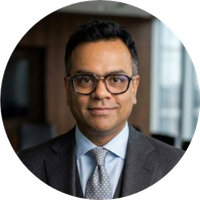
Speaker: Biswa Sengupta, Chief AI Technologist for the LLM Suite at JPMorgan Chase
Session: Fireside Chat: How JPMorgan Chase Decides Where AI Belongs
This is the one question every CISO we talk to is trying to answer for their board. Biswa’s framework at JPMorgan should validate or challenge the criteria PlainID prospects surface with us every week.

Speaker: Bhairav Mehta, Head of AI and ML at JPMorgan Chase
Session: Architecting the Future: The AI Tech Stack for Modern Banking
Bank reference architectures always name the data, model, and orchestration layers, but only some name the runtime authorization layer that sits underneath. Our eye is on Bhairav’s diagram to see whether the enforcement plane makes the reference architecture or lands as a footnote.

Speaker: Tony Ambrozie, SVP, Chief Digital and Technology Officer at CVS Health and Health100
Session: Reimagining the Healthcare Experience: How Health100 Is Putting Consumers First
CVS runs one of the most complex healthcare AI programs in the US, spanning payer, provider, and retail pharmacy. Our design question for Tony is how his team built consent and purpose-based access controls that work under HIPAA and state-level rules without breaking the member experience.

Speaker: Mae-Beth Magno, Head of AI Governance and Strategy, Deputy Chief Privacy Officer at Boeing
Session: To be announced
Mae-Beth is one of the very few speakers with both AI governance and privacy in the same job title. Aerospace-scale governance means export controls, model provenance, and cross-border data flow all inside one policy stack. Whatever the session covers, PlainID is in the front row.
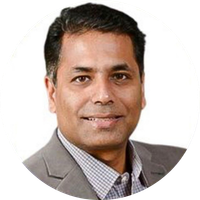
Speaker: Parthasarathi Chakraborty, VP Global Head of Security Engineering at Broadridge Financials
Session: AI vs AI: Cybersecurity in the Age of Generative Threats
Broadridge processes trades for most of the global buy side, and Partha’s team defends that infrastructure. The angle we care about is which controls hold when the attacker uses the same generative tools you do, and where identity-based authorization slots into that defense.

Speaker: Fanny Sie, Digital Health Business Architect, AI Enablement and Trusted Environments at Roche
Session: Guardrails, Observability, and Trust in AI Infrastructure
Fanny’s session maps most cleanly to what PlainID actually builds. The comparison we want is how Roche layers guardrails, enforcement, and observability into a single control plane, and whether pharma treats the pattern as platform work or as governance work.

Speaker: Saad Jawed, Chief Data and Analytics Officer at L’Oréal
Session: To be announced
L’Oréal runs consumer AI across dozens of regulated markets, which means GDPR, LGPD, PIPL, and emerging AI rules all sit on the same pipeline. Our question for Saad is how L’Oréal handles the per-market authorization overlay without cloning the whole stack for every jurisdiction.

Speaker: Erik Reppel, Head of Engineering at Coinbase Developer Platform
Session: Fireside Chat with Erik Reppel, Coinbase
Erik created the x402 protocol, so this fireside puts non-human identity at its most extreme: agents that hold wallets and spend money. Two things we’re listening for are how Coinbase authorizes an agent that can transact, and where accountability lives when the agent makes the wrong call.

Speaker: Nicholas Ginsberg, Executive Director at Morgan Stanley
Session: Retrieval-Augmented Generation (RAG) Use Cases: Unlocking Business Value with Smarter AI
RAG is where AI meets your most sensitive data, and at Morgan Stanley that means client records, positions, and communications under fiduciary rules. What we want to hear is how Nicholas’s team filters retrieval by role, purpose, and jurisdiction before it reaches the model, and where the audit trail sits.

Speaker: Caleb Eastman, Field CTO at Siemens
Session: From Reality to Scale: Agentic AI Operations and Platforms for Industrial Outcomes
The shift from recommendation systems to autonomous decision engines on industrial floors changes the identity model entirely. Caleb’s session should tell us how Siemens decides which agents get to act on which equipment, and how the audit record survives when something goes wrong.

Speaker: Reena Solomon, Head of AI Partnerships at Airbus
Session: Scaling Strategies: From Initial Pilots to Enterprise-Wide Adoption
Airbus’s partnership model spans OEMs, suppliers, airlines, and regulators, which makes cross-organization identity federation the real constraint on scaling AI from pilot to production. Reena’s session should tell us whether the sticking points map to technology, culture, or the reporting split between AI and identity teams.

Speaker: Shanshan Bi, Director of Commercial AI Acceleration, AIML at Pfizer
Session: COCO: An Agentic AI Assistant for Marketing Analytics
COCO is one of the few named production agentic systems disclosed publicly by a top-five pharma. Every field it touches sits under consent, contract, or compliance rules. Two questions we want answered are how Pfizer scoped which agent gets which permissions, and how the guardrails hold up in production.

Speaker: Chakri Kotcherlakota, SVP at Bank of America
Session: Shipping AI-Assisted Code When You Can’t Ship a Hallucination
AI-assisted code shipping to millions of consumer-banking devices is the highest-stakes DevSecOps use case in production. Where identity and permission checks fit inside the defense layers is what we came for, especially when the AI writing the code does not know which permissions are real.

Speaker: Dan Mackey, Director of AI Innovation Worldwide at The Cigna Group
Session: Something From Nothing: The Hidden Origin of Every New Idea
Most unusual session on the roster. Every innovation Cigna ships eventually crosses HIPAA and provider-data boundaries. Our plan is to soak up Dan’s framing on where new ideas come from, then apply the governance lens after the fact.

Speaker: Ravi Teja Prabhala Venkata, Senior Manager, Software Engineering at Capital One
Session: Code Quality, Security, and Culture in the AI Coding Era
Capital One holds a public track record at the intersection of DevSecOps and AI. Ravi’s session should show us how the security review process wires into AI-generated pull requests, and where identity and permission checks land inside the pipeline.

Speaker: Frank Kartmann, Vice President, Big Data and Cloud Architecture at Deutsche Bank
Session: Scaling Compute for the AI Enterprise: Strategies for Power, Performance, and Flexibility
Deutsche Bank operates under DORA, which turns scaling compute for AI without scaling the control plane around it into a regulatory question. For Frank, the value is in how his team maps infrastructure decisions to the operational-resilience framework the regulator is actually watching.
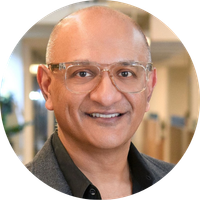
Speaker: Jeetu Patel, President and Chief Product Officer at Cisco
Session: Intelligence, Cost and Control: Infrastructure for Agentic AI
Cisco has been running networking, security, and operations as one problem long before agentic AI arrived, and Jeetu’s keynote frames every agentic action as a routing decision, a trust decision, and a telemetry event. Our interest is in how a networking-first company thinks about the trust layer as inseparable from the infrastructure layer, and what that suggests for enterprises building agentic AI on stacks originally built for human users.

Speaker: Gal Helemski, CTO & Co-founder, PlainID
Session: Setting Boundaries for Agentic AI: Preventing Data Exposure at Enterprise Scale
Gal will cover runtime controls across the full agentic AI flow, guardrails at every access point, and central authorization for every human and machine identity.
The Identity Gap Behind Every Ai4 2026 Session
Notice what almost none of the session titles include. Identity. Authorization. Access control. Runtime enforcement.
We don’t think this pattern is an accident. Enterprise AI leaders ship models, agents, and business outcomes for a living. Identity and authorization sit in a different reporting line, usually under the CISO or Chief Identity Officer. And that reporting split is where audit-committee questions land.
Every AI system the speakers describe on stage passes through four control points:
- The prompt input
- The tool or MCP invocation
- The data retrieval
- The response generation
PlainID enforces policy at all four points, in real time, using one PBAC policy language across apps, APIs, data, microservices, and AI agents. Gartner names PlainID in three 2026 reports covering this exact space, including the Market Guide for Guardian Agents, Reference Architecture Brief for IAM for AI Agents, and Sector Overview: Information Security and Risk Management, 2Q26. Our Fortune 500 clients like Wells Fargo, Cisco, Accenture, and FM Global run this pattern in production. The audit committee gets an answer their regulator accepts.
Meet PlainID at Ai4 2026
Ai4 2026 runs August 4 to 6 at The Venetian in Las Vegas. The speakers above will spend three days explaining what production enterprise AI actually looks like. PlainID will be on site to help identity, security, and IAM leaders translate that work into policy their audit committees can defend.
Find out booth #1045 or book a 30-minute session with the PlainID team on-site. Bring a specific agent use case, a compliance question, or an audit gap you are trying to close. We will walk through how runtime authorization applies, using your stack, your data platforms, and your regulator.
Related articles

AI Agent Authorization: Why Static Roles Break
Give an AI agent a role, and you’ve made a bet you can’t take back…
SaaS Authorization: When Access Reviews Fall Behind
A quarterly access review tells you who had access on the day someone ran the…
What Is Relationship-Based Access Control (ReBAC)?
Relationship-based access control decides who gets into a resource by checking how two things connect,…