

Turn Any Gateway into an Agentic Access Control Plane
Identity-aware, agent-aware, and intent-aware runtime authorization for API, AI, and Model Context Protocol (MCP) gateways
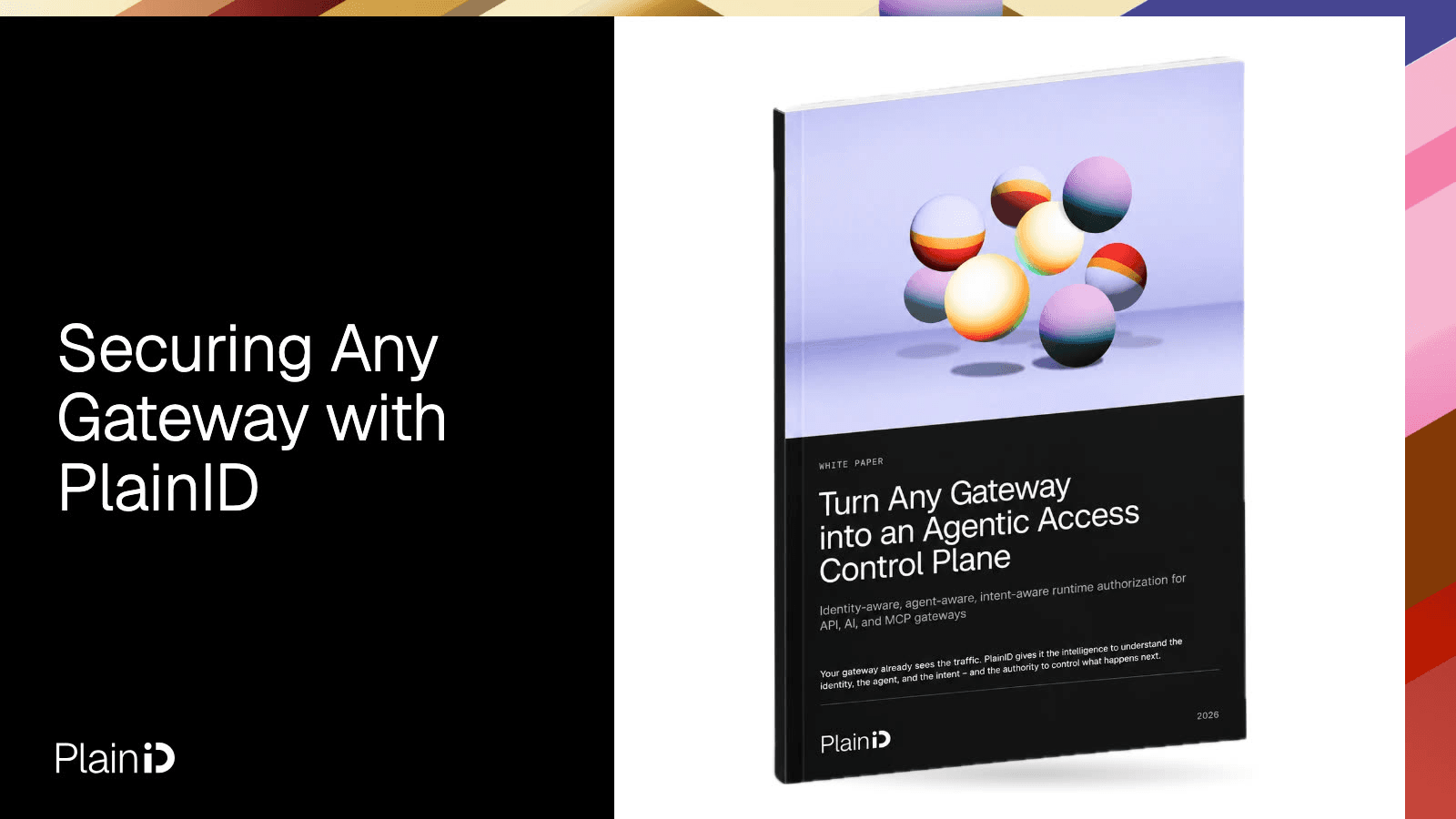

What You’ll Learn Inside the White Paper
Explore how to extend your existing gateway into dynamic enforcement points without embedding security logic into every AI agent:
The 3-Stage Gateway Guardrail Architecture
How to enforce policy at the Input stage (task authorization), MCP/Action stage (tool and parameter constraints), and Response stage (data masking and redaction).
Full MCP Controls
Reduce ‘get tools’ response, control tool and parameter usage, and mask sensitive data from response.
Bounded Delegated Authority
How to bind human user context with AI agent credentials to prevent over-permissioned “agent superpowers”.
Protecting the Data Path
Applying pre-retrieval query filtering and post-retrieval field masking directly within the traffic path.
Centralized Policy with Distributed Enforcement
Managing authorization centrally while executing sub-millisecond decisions locally at the gateway.
Loading form…
Trusted by
Fortune 500 organizations















Enhance Your Own Gateways
Don't deploy another security silo. Bring identity, agent, and intent awareness directly to the gateways you already trust.
While other vendors force you to deploy standalone IAM gateways and build new proxy silos, PlainID layers runtime authorization directly onto your existing enterprise gateways. You turn the gateway infrastructure you already own into an AI-ready security control point with zero code rewrites.
As enterprise traffic shifts from traditional human-initiated API calls to autonomous AI agents, existing gateways face severe enforcement limits. An AI agent dynamically selects tools, queries vector databases, invokes MCP servers, and executes multi-step workflows on behalf of users.
Standard API gateways ask a binary question: “Can this client reach this endpoint?” Agentic systems require a continuous question: “Should this specific user-agent combination be allowed to perform this exact action, with these parameters, against this resource, for this purpose, right now?”
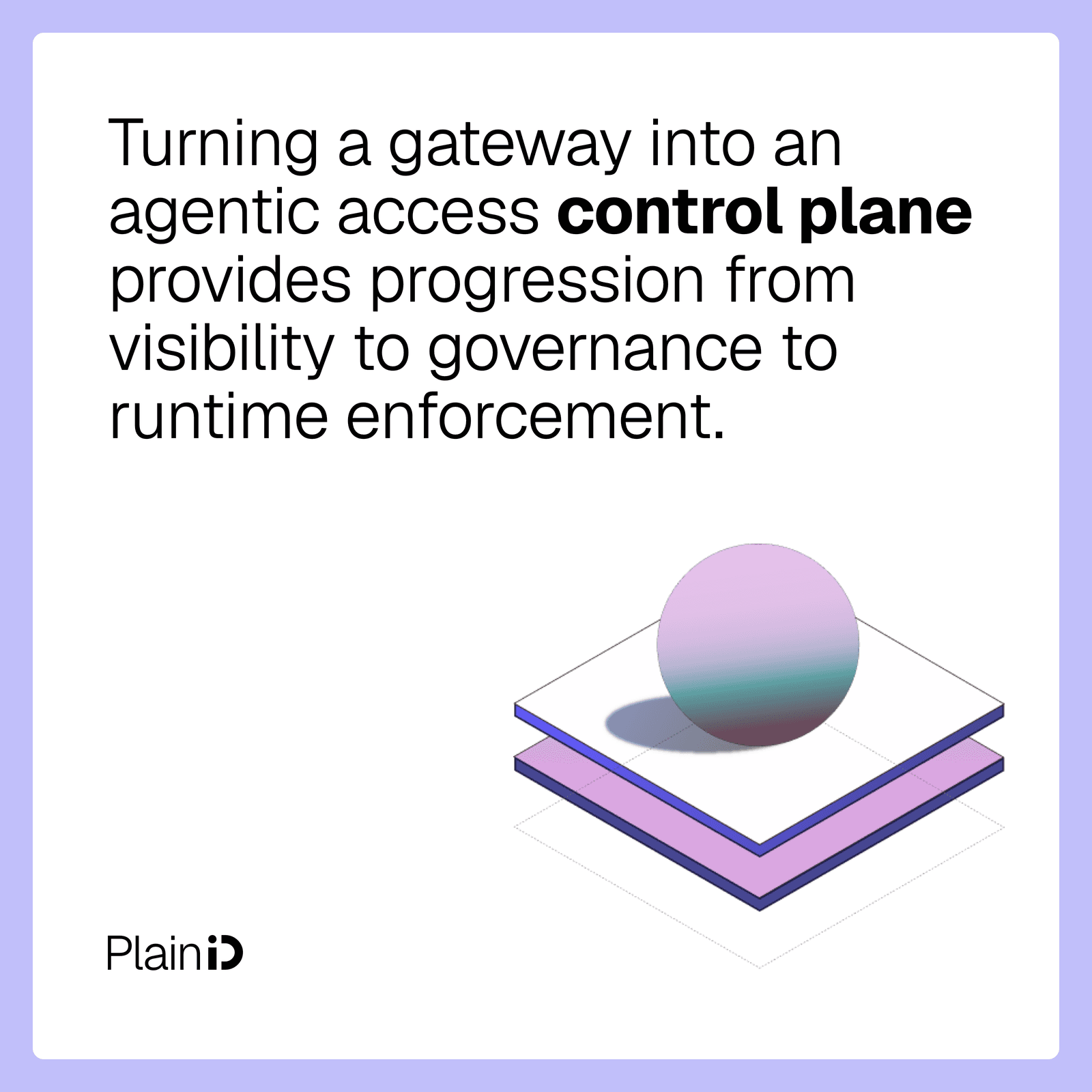
Without runtime authorization intelligence at the gateway, five critical enforcement gaps emerge

The Identity Gap
Gateways don’t have visibility to the identity context and the relationship between the human initiator and the AI agent executing delegated tasks.

The Intent Gap
Understanding of intent is lacking; the gateway cannot verify why an agent is invoking an API or whether the action fits the task.

The Tool Gap
Network reachability doesn’t mean the tool should be available to the agent or how it should be used.

The Data Gap
Legitimate operations retrieve or expose unmasked rows, fields, or records the agent or the user should not see.

The Audit Gap
Traffic logs show that calls occurred, but lack an explainable decision trail for why access was allowed or constrained.

Ready to turn your gateways into an agentic control plane?
See how PlainID delivers identity-aware, agent-aware, and intent-aware runtime authorization across your API, AI, and MCP gateways in real time.